Welcome to The Outlaw Report’s Q&A series, focused on the cannabis landscape of the Mid-Atlantic. Our series aims to shine a spotlight on the trailblazers and experts who are shaping the local cannabis industry. Through their first-hand experience and insights, we explore the successes, challenges and stories of businesses and individuals at the forefront of cannabis policy, business and innovation in the region.
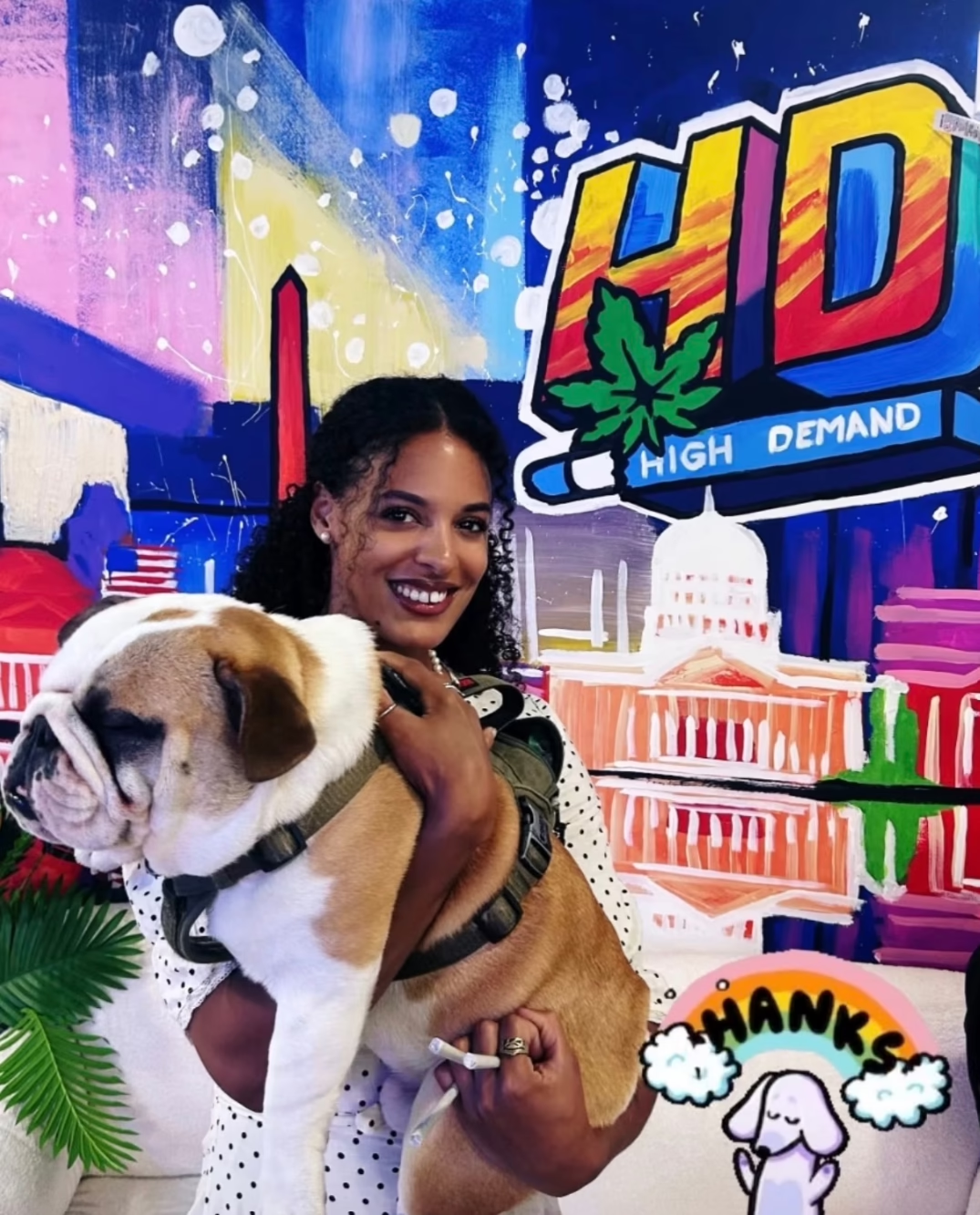
Before entering the cannabis industry, the founder of D.C. medical dispensary High Demand, Johannes Cassidy-Seyoum, ran an NGO in Siem Reap, Cambodia, teaching artisanal skills to land mine survivors. That work in social enterprise taught a lasting lesson: a business can be self-sustaining while holding a deep responsibility to the people it serves. Today, those same principles guide High Demand’s approach to the D.C. cannabis market—treating cannabis retail as a matter of public service, trust, and community stewardship.
Q: What drew you to the cannabis industry in the first place?
A:I was much younger then, and I was at a transitional point in my life.
I had just returned to the United States after living overseas, where I managed an NGO in Siem Reap, Cambodia. We worked with people who had lost limbs to land mines and unexploded ordnance left behind from the Vietnam War era. America’s impact on that region is not something confined to history books. Decades later, people are still being injured and killed by remnants of those conflicts.
Our work was focused on helping people build something sustainable for themselves and their families. We taught artisanal skills like weaving and jewelry making so people could earn an income, support their children and create some measure of independence. Over time, I helped transition the NGO from an organization that primarily depended on donations into more of a social enterprise, where the sale of the products people were making could help sustain the organization itself.
Once we had gotten to that point, I felt like my job there was done.
I came back to America without a completely clear idea of what I wanted to do next. Around that time, a close family friend told me he had started working in cannabis in California. I was young, curious and ready for another adventure, so I packed my bags and moved my girlfriend at the time, her dog and myself to Los Angeles.
What started as a new adventure quickly became something much deeper.
Cannabis itself was new to me, but the world surrounding it felt strangely familiar.
I had grown up overseas, traveled extensively from a young age and spent much of my life moving between different countries, languages and cultures. When you grow up that way, you develop a certain cultural fluidity almost without realizing it. You learn how to enter a room where you may not fully understand the rules yet. You learn to listen before assuming. You learn that people can communicate, negotiate, build trust and view the world in completely different ways without one way necessarily being wrong.
Those instincts became incredibly useful in Los Angeles.
The cannabis industry I entered was intensely multicultural, relationship driven and full of people from completely different walks of life. I met growers and breeders, immigrants and old school California cannabis families, entrepreneurs, artists, salespeople, marketers and people who had spent years operating in an industry where understanding risk was simply part of surviving.
In many ways, I had been preparing for that environment my entire life without knowing it.
I could move between those different circles naturally. I could sit with people from very different backgrounds, understand where they were coming from and build relationships without expecting everyone to speak the same cultural language. Sometimes I found myself becoming a bridge between people and communities that otherwise might not have interacted easily with one another.
The deeper I went, the more fascinating the tapestry became.
That was when I began to understand cannabis as something much larger than a product. It brought together people from every imaginable culture who were all chasing some version of the same thing: opportunity, independence, creativity and the chance to build something of their own.
In that sense, cannabis came to feel to me like one of the purest expressions of the American dream.
Then I discovered another layer entirely: the artistry of the plant itself.
Breeding and cultivation sit somewhere between agriculture, science, craftsmanship and creative expression. Genetics, environment and cultivation can produce an extraordinary range of aromas, flavors, structures and effects. A great breeder or cultivator began to remind me of a chef, winemaker or artist, someone working with a vast palette and trying to create a particular expression.
Around that artistry was an equally complicated world of business. Cultivation, manufacturing, genetics, branding, marketing, logistics, sales, finance, relationships and risk analysis all existed on top of one another. I had never encountered another industry where so many different disciplines, personalities and cultures collided in the same place.
One memory has always stayed with me because, in a strange way, it captured everything I loved about cannabis in a single moment.
I had grown up for part of my life in Laos in Southeast Asia. Years later, I found myself sitting on a mountain in a remote part of Northern California, surrounded by cannabis, eating Lao food and speaking a language I had learned as a child and never imagined I would have an opportunity to use there.
I remember looking around and thinking how improbable the entire scene was.
A language from my childhood, food from Southeast Asia, a mountain in Northern California, people from completely different backgrounds, all somehow connected through cannabis.
There are not many industries that could have created that moment.
And in many ways, my life has continued to come full circle since then.
When I look at how I try to run High Demand today, I realize that many of the ideas that shaped me before cannabis never actually left. The work in Cambodia taught me that an organization can be financially sustainable while still understanding that its purpose extends beyond the transaction. A business can support itself and still have a responsibility to the people it serves.
That idea has become increasingly important to me in cannabis.
It is clear to me now that, in many respects, we are public servants before we are businessmen.
Of course, High Demand has to be a healthy business. We have employees whose livelihoods depend on us. We have bills to pay, regulations to follow and an organization that has to remain sustainable. But none of that changes the fact that we also have a duty to provide people with safe and reliable access to medicine and to products they can trust.
I take that responsibility very seriously.
A patient buying an edible, a vape or a concentrate cannot necessarily look at that product and know everything that is inside it. They are placing trust in the cultivator or manufacturer who produced it, in the system that tested it and ultimately in the dispensary that chose to put it on the shelf and recommend it to them.
We are part of that chain of trust.
That means our job cannot simply be to move as much product as possible. It means educating people, curating responsibly, being honest when something is not right for someone and remembering that the person walking through the door is a human being before they are a transaction.
That philosophy is not very different from what I learned in Cambodia all those years ago. The circumstances are completely different, but the underlying question is remarkably similar: how do you build something sustainable while never forgetting who it is supposed to serve?
Looking back, cannabis ended up connecting parts of my life that at the time seemed completely unrelated. Growing up across cultures taught me how to move between different worlds. My work overseas taught me about service and social enterprise. California introduced me to an extraordinary community of entrepreneurs, artists and risk takers. Cannabis itself taught me to appreciate the incredible intersection of agriculture, science, craftsmanship and culture.
And now High Demand gives me an opportunity to bring all of those lessons together.
I entered the cannabis industry because I was looking for my next adventure. I stayed because I found an industry where almost everything I had experienced before arriving in it suddenly had a purpose.
For that, I am incredibly grateful.

Q: Where do you think the D.C. cannabis market is headed over the next five years?
A: I think the next five years are going to fundamentally reshape what the D.C. cannabis market looks like. We’re moving out of a period where simply having access to the market or having product on the shelf was enough. As more licensed operators come online, competition will increase, consumers will become more educated, and the businesses that survive will have to offer something more meaningful than cannabis alone.
I expect the market to become much more sophisticated. Pricing will become more competitive, product quality will rise, menus will become deeper, and operators will have to become better at retail, branding, hospitality, compliance and customer experience. At the same time, I think there will be a natural shakeout. Not every business entering the market today will still be here five years from now. Access to a license creates an opportunity, but it does not guarantee a sustainable business.
What makes D.C. particularly interesting is that it is not just another cannabis market. It has a long established cannabis culture, a very diverse customer base, a strong neighborhood identity and a history that predates the current regulated system. I think the strongest licensed businesses will be the ones that preserve some of that character rather than turning cannabis into a completely generic retail experience.
I also think the definition of a dispensary will expand. The best operators will become trusted curators and community institutions. Customers will increasingly expect knowledgeable staff, consistency, convenience, delivery, strong digital experiences, interesting products and a reason to feel connected to the place they are buying from.
That is something we have tried to do at High Demand while also being honest about the transition D.C. has gone through. We do not deny that, for many customers, the end of the Initiative 71 era initially meant fewer places to buy from and fewer choices. If you had a trusted vendor, an amazing community around them and someone who genuinely filtered through products well, losing that could feel like a major step backward.
We acknowledge that reality rather than pretending the transition has been seamless. At the same time, we try to educate people that where the regulated industry stands today is not the final destination. It is the beginning of a much larger market that is still being built. Over time there should be far more operators, more products and more meaningful choices for consumers. And particularly with products like edibles and vapes, having more options that are independently lab tested, accurately labeled and produced within a regulated system is ultimately better for a much broader group of consumers.
In the short term, I do think there may be some difficult years ahead. With Virginia’s adult use market expected to come online, D.C. operators could find themselves increasingly sandwiched between two recreational markets that may have access to cheaper inputs, greater scale and fewer of the structural limitations we currently operate under.
But we are optimistic about what that pressure can produce. Competition has a way of forcing businesses to become sharper. It will require D.C. operators to raise the bar, adapt and become much more intentional about what they offer. We will have to compete not simply on access, but on product quality, curation, service, convenience, trust and the overall experience we create for customers.
As competition increases, trust and reputation also become much harder to manufacture and much more valuable. Ultimately, I think that pressure can make the D.C. market better. The businesses that adapt will have to provide products and experiences of genuinely high quality.
My hope is that five years from now D.C. has a more mature, competitive and professional cannabis market, but not a sterile one. I hope the businesses that remain are not simply the ones that sold the most cannabis, but the ones that became meaningful parts of the neighborhoods and communities they serve. That is the kind of market we want to help build.
Q: What’s the hardest part about running a dispensary in Washington, D.C.?
A: The hardest part of running a dispensary in Washington, D.C. is probably that we are trying to build a mature, sustainable business inside a market that is still figuring out what it is going to become.
And I think you have to understand where D.C. cannabis came from to understand why that is so difficult.
At its height, the Initiative 71 economy was enormous compared with the regulated market that exists today. D.C. had become much more than a cannabis market for the people who lived within the District. It was a regional destination. People came into the city from Maryland, Virginia and considerably farther away because D.C. had developed an ecosystem of vendors, products, events and cannabis culture that simply did not exist in much of the surrounding region at the time.
For a period, D.C. was effectively a cannabis hub for a significant portion of the Mid Atlantic.
That created an enormous ecosystem, but it was an ecosystem built under very different rules.
Today we are trying to transition from that world into a regulated medical market. The new market is safer and more accountable in important ways, but it is also considerably smaller than the I 71 economy it replaced. That distinction matters. We should not pretend that regulation immediately created a bigger or more competitive marketplace for consumers. In many respects, particularly during this transition, it did the opposite.
So one of the hardest things about operating today is that we are building within the gap between what D.C. cannabis was and what we believe it can eventually become.
On the surface, we are retailers. We have employees, inventory, customers, marketing, rent and payroll just like any other retail business. Underneath that is an incredibly complicated regulatory and operational environment. Compliance touches almost everything we do, from sourcing and testing to inventory tracking, patient verification, packaging and delivery.
But patients do not walk through our doors thinking about that infrastructure. They want a great experience, and they should.
Our responsibility is to absorb that complexity behind the scenes so the experience in front of them feels simple.
Then there is the economic reality. We are operating a smaller regulated market while the states surrounding us continue to develop their own cannabis industries. Some of the same customers who once traveled into Washington because D.C. offered something they could not find at home increasingly have alternatives closer to them.
That forces us to answer a much more interesting question: why should somebody choose us when access alone is no longer enough?
I actually think answering that question will ultimately make us better.
It means a D.C. dispensary cannot simply be a room with cannabis on shelves. We have to become better curators, better retailers, better educators and better hosts. The products have to be excellent. The experience has to be excellent. People have to trust us. And we have to create something with enough identity and value that people choose to come back even when they have other options.
That is probably the hardest part of running a dispensary here, but it is also what makes this moment so interesting.
We inherited an incredibly rich cannabis culture, but we are building its next chapter inside a completely different framework. Our challenge is to take what regulation can genuinely improve, particularly safety, testing, accountability and consistency, without losing the community, creativity, relationships and cultural depth that made D.C. cannabis special in the first place.
We are building a business, but at the same time we are helping answer a much larger question: what does D.C. cannabis become next?
Q: Has running this business changed how you think about cannabis itself?
A: Running a business, not necessarily. But moving from a more behind the scenes role into retail fundamentally changed how I understand cannabis.
Before retail, my work was less customer facing and more focused on the industry itself: growers, breeders, operators, products, genetics, culture and the business surrounding the plant. I understood cannabis through the people producing it and the systems built around it. Retail brought me directly into contact with the people using it.
Standing on the other side of the counter every day gives you a different perspective. You see how differently cannabis fits into people’s lives. For one person, it may be about sleep. For another, pain, appetite, anxiety, relaxation, creativity or simply finding a way to feel more like themselves at the end of a difficult day. Sometimes the reason is serious and deeply personal. Sometimes it is simple. Either way, you begin to understand that the same plant can mean something entirely different to every person who walks through the door.
Some of those interactions have stayed with me. I think about a veteran who lives with PTSD and told us that, after a long and difficult week of work, the thing he looked forward to most was going home to unwind and relax. Cannabis was part of how he decompressed, found relief and reclaimed a little peace for himself. I also think about a cancer patient who used tinctures to help her sleep. For her, cannabis was not about chasing a high or trying something new. It was about getting through the night and giving her body a chance to rest.
Those conversations connected a lot of dots for me.
They made cannabis feel less abstract. You stop thinking only in terms of products, strains, categories and sales, and start seeing the real, everyday impact those products can have on individual people. You see someone return and tell you that something helped them sleep through the night, manage discomfort, regain their appetite or simply improve the quality of their day. Those interactions stay with you.
They also create a much stronger sense of responsibility.
When someone asks what they should take home, they are placing trust in you. They are trusting that you understand the product, that you have been thoughtful about what belongs on your shelves and that you are trying to guide them toward something appropriate rather than simply trying to make a sale.
Retail made that responsibility tangible. It reinforced that this work is not just commerce. We are participating in a deeply personal part of people’s lives. That means we have a responsibility to educate, listen carefully, curate thoughtfully and take the safety, quality and consistency of what we provide seriously.
So I would not say that running a business changed how I think about cannabis. Moving into a customer facing retail role did.
It brought me closer to the people the industry ultimately exists to serve. More importantly, it made me appreciate cannabis not just as an industry or a collection of products, but as something that can have a real and deeply individual impact on someone’s everyday life.
Q: When hiring budtenders and retail staff, what qualities do you look for beyond just cannabis knowledge?
A: Cannabis knowledge matters, but it is honestly not the first thing I look for.
You can teach someone cannabis. You can teach products, cannabinoids, terpenes, genetics and how the systems work. What is much harder to teach is judgment, kindness, social fluency, curiosity and the ability to make another person feel comfortable.
The first thing I look for is how bright someone is, and I do not necessarily mean academically. I mean whether they absorb information quickly, connect dots, ask good questions and can reason through a situation they have never seen before.
Then I look for kindness. Genuine kindness is difficult to manufacture in retail. Eventually, who you are comes through. I want people who naturally care about the person standing in front of them.
Social fluency is probably one of the qualities I value most. A great budtender needs to be able to read a room. One patient may want to spend twenty minutes talking about genetics. Another may be nervous and walking into a dispensary for the first time. Someone else knows exactly what they want and would rather be in and out in two minutes. Good hospitality is recognizing those differences without needing a script.
I also look closely at emotional maturity and the ability to function under pressure. Retail can be stressful. You are dealing with coworkers, personalities, lines, deliveries, inventory issues, regulations and customers who may themselves be having difficult days. I want people who can stay grounded, use judgment and not allow every stressful moment to become an emotional event.
Humility matters too. I would much rather have someone say, “I don’t know, but let me find out,” than confidently give a patient bad information. Curiosity combined with humility is usually what produces real expertise over time.
Reliability and ownership are equally important. On a small team, everything you do affects everyone around you. I want people who notice what needs to be done and step into it instead of hiding behind the narrowest definition of their job.
But underneath all of that is something larger. I am not trying to build a place where staff are interchangeable and the only goal is to move people through as quickly as possible.
A great retail environment should have some humanity to it. It should feel warm, lived in and personal. Customers should feel like the people helping them are actually present with them, not just waiting for the next transaction.
That is why personality matters to me. Individuality matters. Warmth matters. I do not want every budtender to sound the same or approach people the same way. Different employees should connect naturally with different patients and bring something of themselves into the space.
Over time, those small interactions are what create culture.
A customer remembers the person who took the time to explain something to them. They remember being greeted when they walked in. They remember the employee who understood what they were looking for, or simply treated them with patience and respect.
Those moments may never show up on a sales report, but they are what make people feel connected to a place.
So ultimately, when I hire someone, I am not simply asking whether they can sell cannabis.
I am asking whether this is someone I trust to help shape the experience people have when they walk through the door.
If someone is bright, kind, emotionally grounded, socially fluent, curious, dependable and capable of exercising good judgment, I can teach them cannabis.
What is much harder to teach is how to make a place feel human.
Q: What is one local policy change that would make life easier for cannabis patients and businesses alike?
A: I would like to see D.C. take the self certification system it already has and make it truly seamless at the point of sale.
For adults 21 and older, I think the process should be closer to a controlled access, behind the counter model: present a valid government ID at a licensed dispensary, complete the required self certification and acknowledgment electronically, and allow the retailer to process the registration immediately.
We would still preserve the safeguards that matter. Purchases could continue to be tracked against the existing rolling 30 day allotment, age would still be verified, products would still be tested and tracked, and licensed operators would remain accountable to the regulatory system.
The difference is simply less friction for the patient.
D.C. has already made real progress by allowing adults to self certify. I think the next logical step is to make that process almost invisible to the consumer, and ideally eliminate the remaining registration costs for visitors as well.
The safest and most accountable way to buy cannabis should also be the easiest way to access it.
Q: What aspect of High Demand are you most proud of?
AThe thing I am most proud of is probably that High Demand is beginning to feel like more than a store.
I want walking into High Demand to feel like walking into someone else’s story.
Like you have stepped into a world that was already moving before you opened the door. A place with its own rhythm, characters, knowledge, rituals, history and depth. You may only be there for ten minutes, but for those ten minutes you become part of it, and ideally you leave with a little bit of something special that stays with you.
I think about the neighborhood bagel shop on a Sunday morning that has been there for ten years. It is busy, maybe a little chaotic, but there is a rhythm to it. The people behind the counter move quickly because they know their craft. Regulars are recognized. Someone is already making an order before the customer finishes saying it. New people can immediately sense that there is history there, that the place existed before they arrived and will continue after they leave.
That feeling of depth is what I want.
We sell cannabis, but I do not think our craft is simply selling cannabis. Our craft is knowing it, curating it, understanding people and connecting the two honestly.
I never want someone steered toward a product because we need to move it, because the margin is better or because it is the most expensive thing on the shelf. If the $30 product is genuinely better for that person than the $55 product, I want us to tell them to buy the $30 one.
That may cost us something in that moment, but it creates something much harder to buy: trust.
Over time, I want people to realize that we are not trying to extract the most money possible from every interaction. We are trying to understand what they actually want and give them something good.
That is when a store becomes someone’s place.
There is also something I love about the relationship between speed and care.
Efficiency does not have to feel cold. The best craftsmen often make difficult things look effortless. A baker who has made the same loaf ten thousand times does not care less because his hands move quickly. The speed comes from familiarity. The movements become almost instinctive because there is knowledge underneath them.
That is how I want High Demand to operate.
People can be waiting, phones ringing, deliveries going out and orders being packed, and underneath all of that movement there should still be a feeling that says: we see you, we know what we are doing, your time matters, your money matters and your medicine matters.
There should be joy in being good at it.
There should be satisfaction in moving fast, knowing the menu, remembering people, getting an order exactly right, finding someone the perfect product and watching an operation move almost like a kitchen during dinner service. Everyone knows where to be. Everyone understands their part. There is urgency, but the urgency has purpose.
That is craftsmanship too.
It exists in the buyer who passes on mediocre flower even when it would be profitable. It exists in the employee who remembers what someone enjoyed three weeks ago. It exists in the person who catches a mistake before an order leaves the building. It exists in the driver who understands that they are not simply transporting a bag. They are completing the last few feet of someone’s experience with us.
Cannabis also sits in a unique place between commerce, culture, pleasure and medicine.
For one person, it is how they relax after work. For another, it is how they sleep. For another, it is appetite, pain relief or simply something they enjoy with friends.
I do not think it is our job to decide which of those relationships is more legitimate.
Our job is to respect all of them.
That is why accessibility matters. Price matters. Education matters. Selection matters. It matters that we do not make someone feel stupid because they do not know something. It matters that someone who has never stepped inside a dispensary can feel just as comfortable as somebody who has been smoking for twenty years.
To me, being part of a community also means understanding that we are stewards of something. People trust us with their money, their experience and, in many cases, their medicine. That carries a responsibility beyond making a sale.
And then there is the part that is harder to put into business language.
I want people to leave with a little bit of something special.
Someone might walk through our door after a terrible day and leave laughing. Someone might learn something they did not know. Someone might discover a strain they end up loving for years. Someone might meet an employee who remembers them the next time they walk in. Someone might simply get exactly what they needed in four minutes and leave thinking, these people are really good at what they do.
Individually, those moments are tiny.
But thousands of tiny moments begin to accumulate.
They become culture.
A place gets character the same way an old wooden floor gets its marks. Slowly. One person walking across it at a time.
Conversations. Regulars. Mistakes. Inside jokes. Recommendations that turned out perfectly. Employees becoming experts. Customers bringing in friends and saying, “This is my spot.”
Eventually there is history where there used to only be a storefront.
You cannot manufacture ten years of history overnight.
But you can behave today like you are building a place that deserves to still be there ten years from now.
That is what I am most proud of.
Not that we have finished building that place, because we have not.
I am proud that you can already begin to feel it forming.
High Demand is becoming less like somewhere people simply come to buy cannabis and more like a small part of the fabric of the community. People step into someone else’s story for ten minutes. For that brief time, they become part of our world. We give them our knowledge, our craft, our pace, our personality, our hospitality and our care.
Then they walk back out into their own lives carrying their medicine and, hopefully, a little bit of something special with them.
And when they come back, it should not feel like starting over.
It should feel like returning to a story they already know.
Q: What advice would you give to someone thinking about opening a dispensary in a medical-only market?
A: That is a very good addition because it makes the answer more nuanced: the difficulty is not only a burden; it is also part of what has preserved room for smaller operators.
My biggest advice would be to understand the market you are actually entering, not the market you hope it eventually becomes.
A license is permission to compete. It is not a guarantee that a viable business exists on the other side of it.
In a medical only market, you need to understand the real patient population, how easily new patients can enter the system, how many operators are competing for those patients, what the supply chain looks like and whether your business can survive if growth takes years rather than months.
And if your primary goal is to make a lot of money quickly, I would probably tell you not to do it.
At least in D.C., I see cannabis as a long term passion project. There are easier places to deploy capital if your only objective is maximizing short term returns. You have to be willing to build through an immature market, regulatory changes, increasing competition and periods where the economics may simply be difficult.
There is an irony in that difficulty, though.
If D.C. were an easy market with obvious economics and immediate scale, it would probably be dominated much more quickly by large multi state operators with far greater access to capital. The very things that make this market difficult have also created room for smaller, independent businesses like ours to get established, develop an identity and actually have a chance to grow.
I do not romanticize the difficulty, but I do recognize that it has created an unusual window for local operators to build something meaningful before the market fully matures.
That requires discipline. Keep your overhead reasonable. Be conservative with projections. Spend money on the things patients actually experience: great people, great products, inventory depth, education and systems that make the operation better. A beautiful dispensary is meaningless if the business underneath it cannot survive.
More importantly, remember that a medical market creates a different responsibility.
You are serving people who may be using these products for sleep, pain, appetite, anxiety or simply to make a difficult day more manageable. They are trusting you to provide safe products, honest information and thoughtful guidance. I think that duty to the patient has to come before the desire to squeeze the maximum amount of money out of every transaction.
For me, that is ultimately the mindset required to do this well. You have to care about building the market almost as much as you care about benefiting from it.
And build something people would still choose if access stopped being your advantage. Regulations change. More competitors arrive. Markets eventually mature.
If the only reason someone shops with you is because you have a license and they have limited alternatives, you have built a very fragile business.
Build something that deserves their loyalty when they have ten other choices.
To learn more visit High Demand’s website.