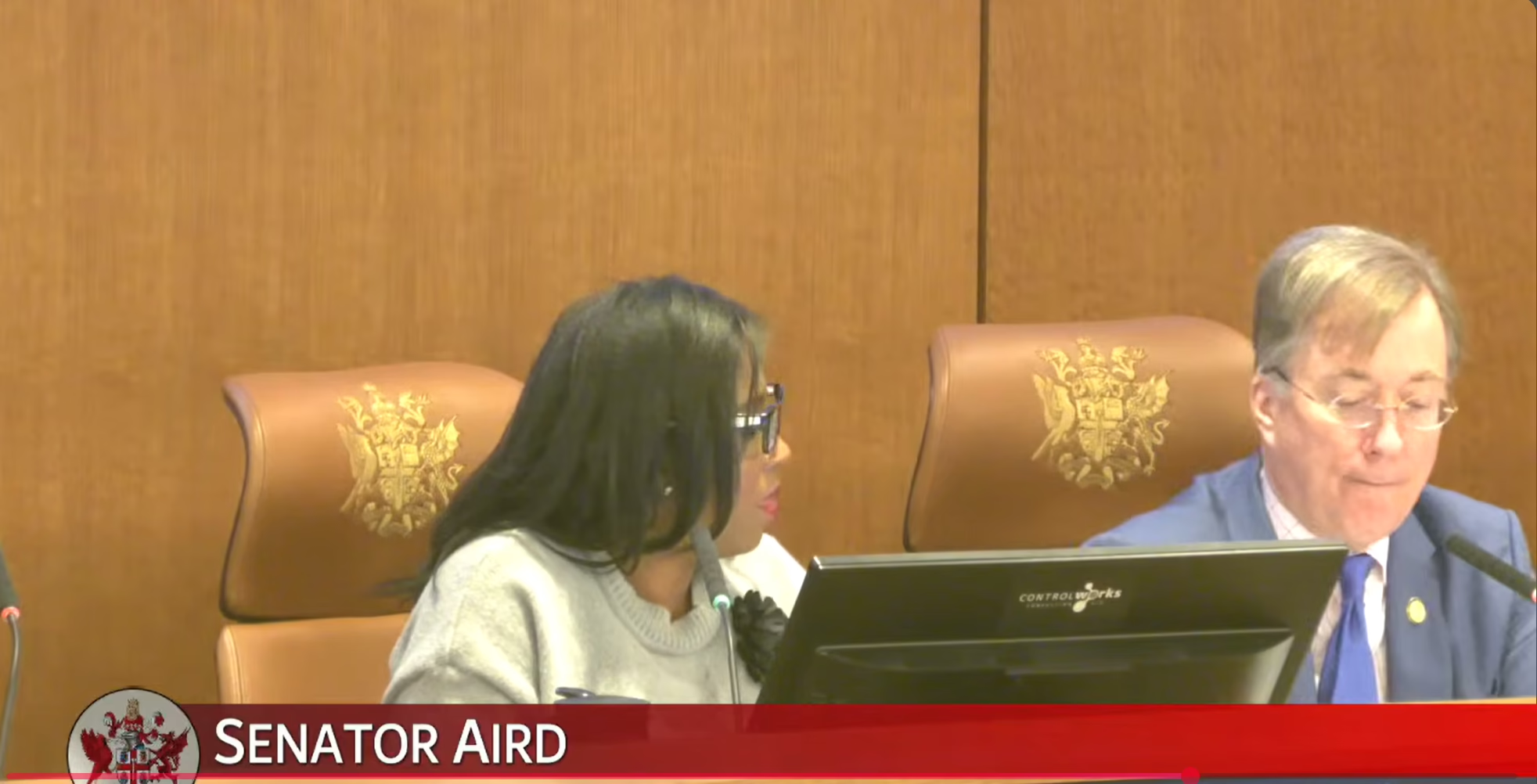
At its final meeting of the 2026 interim session, Virginia’s Joint Commission to Oversee the Transition of the Commonwealth into a Cannabis Retail Marketplace approved six legislative recommendations for the 2027 General Assembly and outlined a flexible strategy for distributing future cannabis tax revenues ahead of the market’s scheduled July 1, 2027 launch.
Chaired by Sen. Lashrecse Aird and Vice Chair Del. Paul Krizek, the panel focused heavily on youth substance use prevention, early childhood care funding, public consumption penalties, and concerns over whether the Commonwealth’s supply chain will be ready to meet consumer demand next summer.
Six Legislative Proposals Approved for 2027
Following a briefing from the Division of Legislative Services (DLS) and public testimony, the commission voted to advance six legislative concepts for consideration in the upcoming 2027 session:
- Lower Public Consumption Penalties: Reduce the civil penalty for public marijuana consumption—currently set to jump from $25 to $250 on July 1, 2027—to a lower, yet-to-be-determined fine. Commission members noted the $250 fine disproportionately burdens apartment and public housing residents who lack legal spaces to consume.
- Youth Prosecution & Penalty Protections: Clarify state code so youths cannot be double-prosecuted for both general public consumption and consumption on school grounds for a single act. On a motion from Del. Marcia Price, the panel amended the proposal to eliminate financial penalties entirely for underage public consumption, favoring educational and treatment interventions instead.
- Local Zoning and Business Hours: Clarify municipal ordinance authority so localities cannot expand dispensary buffer zones beyond the statutory 1,000-foot limit, and ensure retail operating hours are not restricted to fewer than eight consecutive hours per day or seven days per week.
- Legislator Ownership Ban: Prohibit General Assembly members and their immediate family members from holding direct or indirect ownership interests in cannabis businesses during their legislative service and for five years afterward, punishable as a Class 6 felony.
- Technical Possession Updates: Align delayed and repealing statutory provisions to ensure consistency with Virginia’s two-ounce personal possession limit.
- Immediate School Prevention Funding: Draft budget language directing near-term funding toward evidence-based substance use prevention and counseling programs in public schools, particularly in under-resourced and rural divisions, while awaiting a broader state needs assessment.
Endorsing School Counselors and Childcare Stabilization
The commission’s push for youth prevention followed a presentation from Behavioral Health Commission (BHC) policy analyst John Barfield and Executive Director Nathalie Molliet-Ribet. BHC’s statewide study revealed wide disparities in school-based substance use support: only 11% of elementary schools and 29% of secondary schools implement comprehensive, evidence-based prevention combining classroom instruction, skills training, and community partnerships, while just 13% of secondary schools utilize formal universal screening tools.
To address staffing and administrative bottlenecks, the Joint Commission voted to formally double-endorse BHC’s recommendations—which would fund a dedicated clearinghouse position at the Virginia Department of Education (VDOE) and mandate a statewide staffing and cost needs assessment by December 2027—while coupling them with Del. Price’s proposal for immediate baseline funding for certified substance abuse counselors.
Lawmakers also heard from Susanne Bell, president of the Virginia Early Childhood Foundation (VECF), who urged the commission to prioritize updating state childcare subsidy reimbursement rates—which have remained frozen since 2022—before funding new slots. Bell noted that early childhood educators earn roughly $17 to $18 an hour, driving a nearly 33% annual turnover rate, while infant and preschool care costs exceed four-year in-state public university tuition across nearly every region of the state. She pointed to VDOE estimates showing it would take $234 million in FY 2028 to update reimbursement rates and $173 million to add 10,206 slots for eligible children.
Tax Revenue Strategy and Supply Chain Warnings
With state projections estimating retail cannabis tax revenues will grow from $11.3 million in FY 2028 to $74 million by FY 2032, the panel debated how to allocate net profits. Under budget language passed earlier in 2026, specific statutory percentages were stripped out in favor of four broad funding buckets: early childhood and K–12 education, the Cannabis Equity Reinvestment Fund, the Department of Behavioral Health and Developmental Services (DBHDS), and public health campaigns.
Rather than locking in rigid percentages before the governor’s budget release and incoming federal Medicaid adjustments are analyzed, the commission adopted a framework using previously negotiated legislative percentages as a starting baseline for 2027 budget talks—explicitly prioritizing childcare stabilization, public school substance use prevention, and maximizing support for the Cannabis Equity Reinvestment Fund.
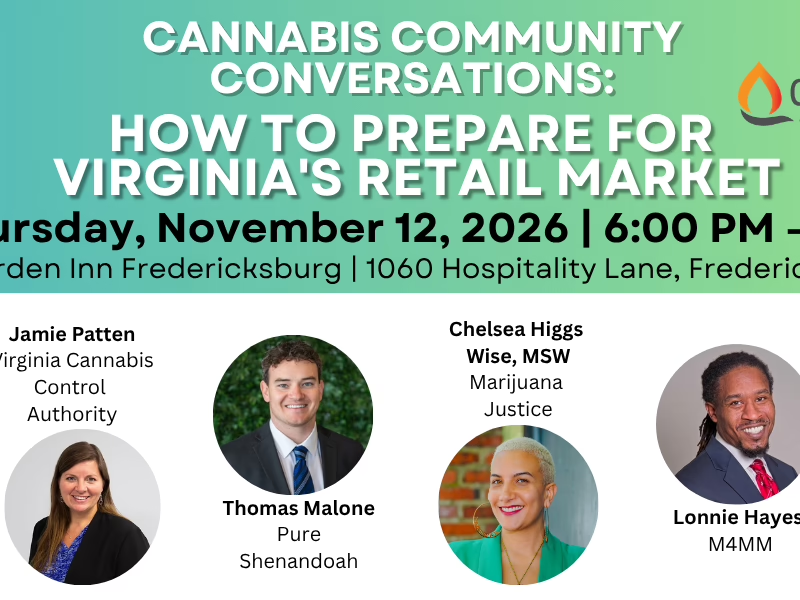
During public comment, Chelsea Higgs Wise, executive director of Marijuana Justice, warned lawmakers that Virginia’s retail rollout faces severe supply bottlenecks on July 1, 2027. Pointing out that operators typically require 13 to 22 months after licensing to become operational, she cautioned that as few as four existing medical operators may be ready to supply the entire Commonwealth at launch, likely leading to widespread product shortages within days.
The Joint Commission, whose statutory mandate runs through June 30, 2028, plans to reconvene in May 2027 to review implementation progress with the Virginia Cannabis Control Authority and address remaining interim mandates, including on-site consumption licenses, microbusiness event permits, and an enforcement Memorandum of Understanding with Virginia ABC.