Padlocked Northwest D.C. Smoke Shop Agrees to $5,000 Fine, Rebrand in Settlement With Regulators
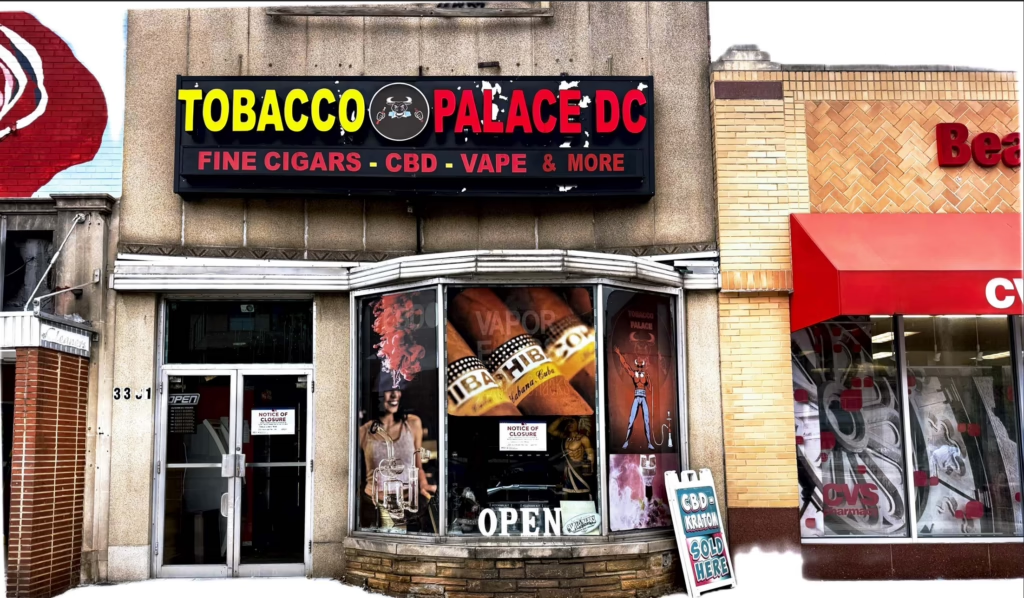
Following an October 28 joint raid by D.C. regulators and police—which took place directly across the street from a newly licensed medical dispensary and yielded over 94 pounds of unregulated THC edibles and raw marijuana, 5 pounds of mushroom edibles, and one employee arrest—Cleveland Park’s Tobacco & Gifts Palace DC (3331 Connecticut Ave. NW) has reached a settlement with the Alcoholic Beverage and Cannabis Board to lift its summary closure order. To remove the padlocks and reopen, the operator must pay a $5,000 fine (with future violations starting at $10,000), drop “Gifts” from its corporate and storefront names to rebrand strictly as Tobacco Palace, destroy all embargoed inventory, permanently halt sales of all cannabis, hemp, kratom, psilocybin, and flavored tobacco products, and submit to ongoing compliance inspections during business hours.
- The next ABC Board meeting is Nov. 18th, 2026: watch, agenda .
- Catch up on the Nov. 21st disposition or subscribe to a paying membership to receive exclusive summaries of Board meetings and see our map of pending and open cannabis businesses in D.C. (There were half a dozen updates to the map this week).
Ahead of Virginia’s July 1, 2027 retail cannabis launch, the Joint Commission overseeing the transition approved six legislative proposals for the 2027 General Assembly. Key measures include reducing the upcoming $250 public consumption fine, eliminating financial penalties for underage consumption, clarifying local dispensary zoning and operating hours, banning lawmakers and their families from cannabis business ownership, and funding school-based substance use prevention. The panel also backed a flexible framework to steer future cannabis tax revenues—projected to reach $74 million annually by FY 2032—toward childcare stabilization, school prevention, and equity reinvestment, even as advocates warned that supply bottlenecks could leave the state with just four active operators on opening day.
Maryland Regulators Codify Up to a Year of Extra Runway for Conditional Cannabis Licensees
Under regulatory amendments adopted by the Maryland Cannabis Administration (COMAR 14.17.05.05), conditional licensees can now formally apply for two consecutive six-month extensions—stretching their total pre-operational runway from 24 months to three full years. To qualify, operators face escalating real estate benchmarks: an initial six-month extension requires showing active interest (such as an LOI) in a zoning-compliant property, while a second extension requires proof of legal control or possession via a binding lease or title. Crucially, the rules allow licensees to pivot to a different property if an initial real estate deal falls through and offer discretionary relief if local governments have unduly delayed their launch—though any license not operational by month 36 faces revocation.
ICYMI: D.C. Shuts 114th Illicit Storefront, DEA Blocks District Operators & Sen. Lucas Faces Expulsion Push
East Coast Roundup
Following their legislative majority wins, New Hampshire Democrats are preparing a renewed push to legalize adult-use cannabis in New England’s sole remaining holdout state, though operators still face the hurdle of a potential veto from anti-reform GOP Gov. Kelly Ayotte.
Philadelphia has emerged as a major hub for clinical medical cannabis research—studying efficacy for chronic pain, insomnia, and other conditions across a market of over 400,000 registered Pennsylvania patients—providing operators with vital data to guide product development.
New Jersey lawmakers introduced a bill that would bar police, first responders, commercial drivers, and heavy equipment operators from off-the-clock recreational cannabis use, signaling a potential contraction in the state’s addressable consumer base.
Culture & More
Glass House Brands ($GLAS) plunged over 33% on Thursday to roughly $1.25 a share—a 90% drop since its June 30 NYSE debut—after replacing auditor BDO (which flagged an unfinished review of its retail spin-off as an “unresolved issue”) with former auditor MGO ahead of November 16 Q3 earnings. The sell-off dragged down the $MSOS ETF by 5.4%, prompted former booster Marc Cohodes to publicly blast CEO Kyle Kazan, and put the stock near NYSE sub-$1 delisting territory.
A large-scale CDC data analysis found that using cannabis just one to five days per month is linked to 40% higher odds of stroke and 23% higher odds of cardiovascular disease regardless of consumption method, signaling potential headwinds for mainstream consumer perception and future health-warning mandates.
A case-control study published in the Journal of Glaucoma using All of Us Research Program data found that cannabis consumption is associated with a reduced risk of primary open-angle glaucoma—highlighting potential new avenues for intraocular pressure modulation and medical cannabis R&D, even as the American Glaucoma Society stops short of endorsing it as a formal treatment.
Around the Country
Hemp-derived THC beverage companies are scrambling to offload inventory to states like Wisconsin, Minnesota, and Tennessee after Illinois’ ban took effect—turning grocery-aisle seltzers into illegal narcotics overnight—ahead of the impending December 11 federal ban.
While hemp operators are seeing temporary state-level enforcement pauses and shifting political support in Illinois and Texas, none of this relief overrides the impending federal ban capping legal products at 0.4 milligrams of total THC per container, according to Cultivated (Nov. 10, 2026). Businesses must prepare for immediate compliance deadlines, as the federal ban hits synthetic cannabinoids on Nov. 12 and most other hemp products on Dec. 11.
Facing severe cultivation oversupply and margin compression in Arizona, Tucson cannabis veteran Moe Asnani is pitching an adaptive-reuse exit strategy for distressed growers by converting power-heavy indoor facilities into 1.5-to-5-megawatt private AI data center nodes.
From the Swamp
The DEA is rejecting federal registration applications from state-legal medical cannabis operators across at least six states and D.C., warning businesses that federal rescheduling will not automatically shield them from compliance friction or grant immediate federal parity.
Several states, including Missouri, enforced their own intoxicating hemp bans ahead of next month’s federal crackdown, forcing immediate retail closures and threatening operators with $5,000-per-transaction fines.
Newly elected Senate and House GOP leaders with long anti-reform track records threaten to stall broader congressional cannabis legislation—such as banking reform—even as the Trump administration moves forward with federal rescheduling.